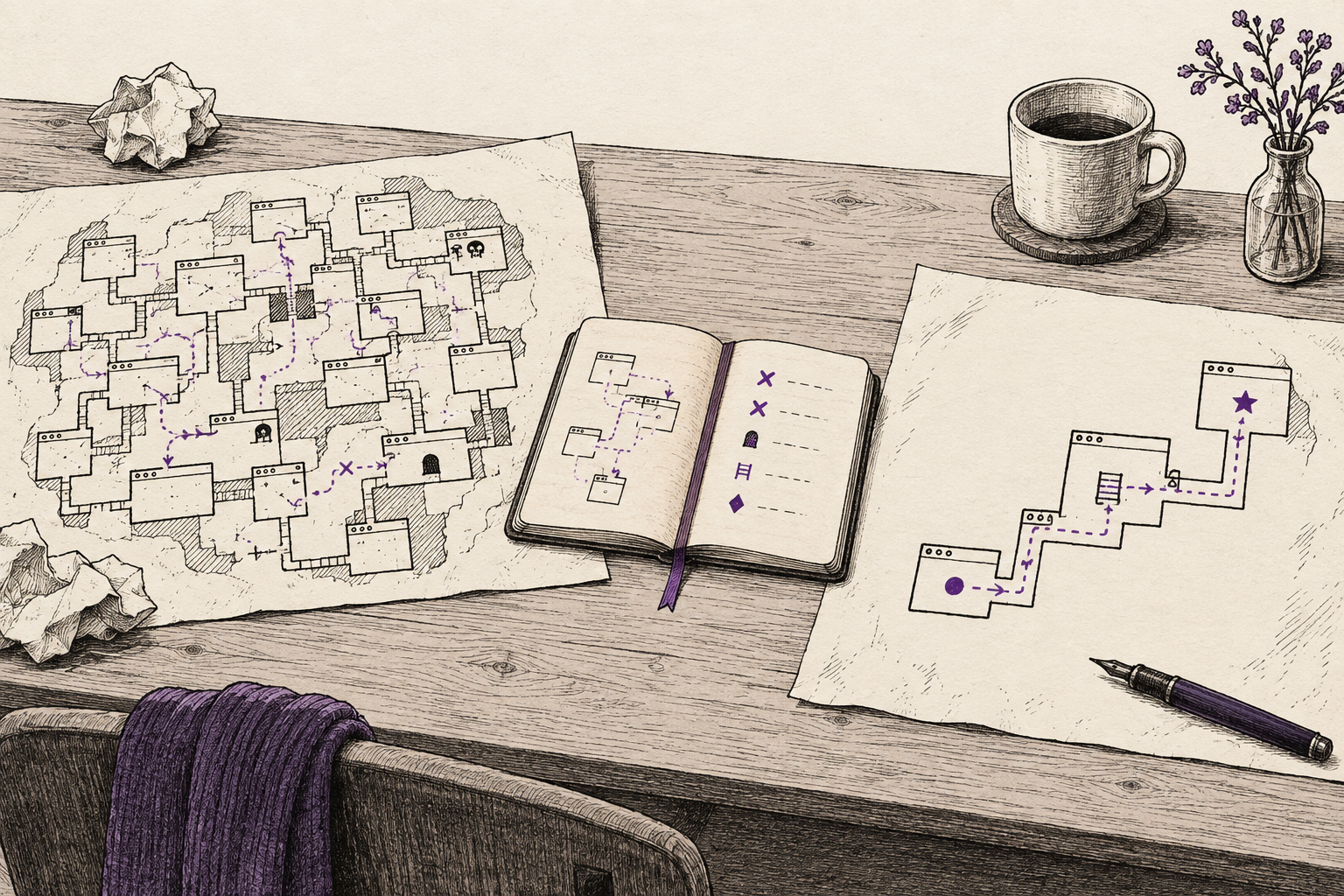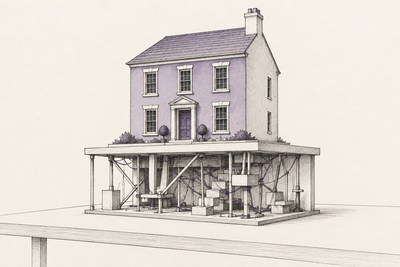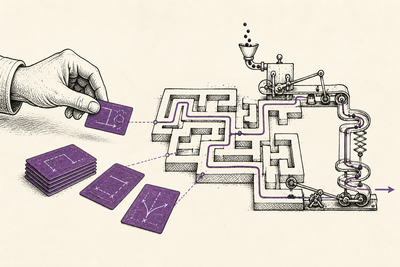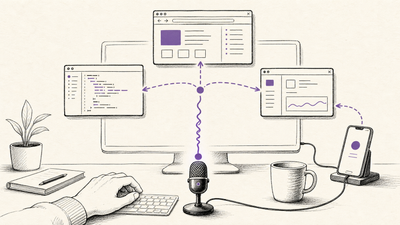
For a while, the competitive edge in AI looked like prompt craft. Write the right instruction, get a better result. Share the prompt, share the advantage. That era isn't over, but the center of gravity is shifting. Reusable AI work is moving out of the individual prompt and into something larger: a configured package of context, tools, instructions, examples, permissions, and workflows.
The prompt remains useful. It remains the interface. But in practice, it increasingly functions as one call into an operating object that was already set up to do something specific.
What the shift looks like in the wild
The clearest evidence comes from how the major labs are building their products. In June 2026, OpenAI released six role-specific plugins for Codex: data analytics, creative production, sales, product design, public equity investing, and investment banking. Each one, in OpenAI's description, "bundles the relevant apps, skills, instructions, and workflows." Across the six, that amounts to 62 connected apps and 110 predefined skills.
That bundling is the point. A sales analyst using the sales plugin doesn't write a prompt from scratch to pull high-priority accounts from Salesforce, prepare for a meeting, and file a follow-up in HubSpot. The package already knows which tools to call, which workflows to run, and roughly what the output should look like. The user types something; the system does quite a lot.
The education plugins released in August 2026 make the design principle explicit. OpenAI describes those plugins as "a package of apps, role-specific skills, instructions, and common workflows that helps students and educators get started immediately without having to construct complex prompts on their own." The goal isn't to avoid prompting. It's to offload the scaffolding that makes prompting effective. The prompt a teacher types is not carrying the full weight of the system. The package is doing most of the lifting.
Why this is a structural change, not a UX refinement
It would be easy to read the plugin model as a convenience layer. Preset workflows that save time. That reading misses the mechanism.
Think of the analogy in software. A function call is convenient, yes. But it also represents something structural: an interface, a contract, a layer of abstraction that allows the system to be understood, tested, shared, and updated independent of whoever calls it. A prompt dropped into a blank chat window is more like writing directly to memory. A plugin-backed prompt is more like an API call.
This matters for how the system behaves over time. Anthropic's research on agent design, published in April 2026, identifies four components that shape agent behaviour: the model, the harness (the instructions and guardrails the model operates under), the tools it can use, and the environment it runs in. Their key observation is that agents' behaviour depends on all four layers working together. A well-trained model can still behave badly through a poorly configured harness or an overly permissive tool. The prompt you type is just one layer of that stack, and often not the most consequential one.
The operator who builds the package decides how the other layers are configured. They set the instructions the model runs under. They choose which tools connect. They define what the environment exposes. The user's prompt operates within that. In any practical sense, the package is the product, and the prompt is the input.
The task horizon is growing
This matters because AI tasks are getting longer. OpenAI's research on agentic work shows that by May 2026, 70.2% of sampled individual Codex users had made at least one request estimated to correspond to more than an hour of human work. At the 99th percentile, daily active users were generating more than 60 hours of agent turns per day, distributed across multiple parallel agents.
A prompt doesn't coordinate 60 hours of agent work. A package does. The instructions, the memory, the tool permissions, the checkpoints: these have to be defined somewhere before the user types anything. The shift to longer-horizon tasks makes the pre-session configuration more important, not less.
The knowledge-work numbers point in the same direction. OpenAI's productivity report on Codex shows knowledge workers now make up about 20% of users and are growing more than three times faster than developers. Their primary uses include reports, research, data analysis, contracts, and workflow automation. These aren't single-turn interactions. They're tasks that require the system to know the organisational context, the format standards expected, the tools in play, and the scope of permissions. That configuration has to live somewhere. Increasingly, it lives in the package.
What operators need to decide
If the package is the product, then the questions that matter most are configuration questions, not prompt questions.
What context does this agent actually need? Organisational data, past outputs, relevant files, domain knowledge? The education plugins, for instance, connect to course materials the teacher or student has already chosen. That choice is design, not prompting.
Which tools should this agent be able to call? Anthropic's framework treats tool permissions as a distinct layer. Granting broad tool access to increase capability also increases the attack surface. The harness needs to define the scope.
What are the constraints? Some agents should never act without human confirmation. Others can proceed autonomously to a point. OpenAI's education plugins carry an explicit design principle: AI should support learning, not shortcut it, and educators and students retain control. That principle has to be encoded in the package, not assumed from the prompt.
What workflows should be standard? Packages bundle common patterns because common patterns exist. If your team produces the same kind of deliverable repeatedly, that process should be in the configuration, not reconstructed in each prompt.
None of this replaces prompting. In practice, a good prompt still matters. What it does is change what a good prompt is for. The prompt handles specifics, intent, judgment calls, the variation the package couldn't anticipate. The package handles structure, context, tools, and constraints.
The prompt becomes the last mile, not the whole road.
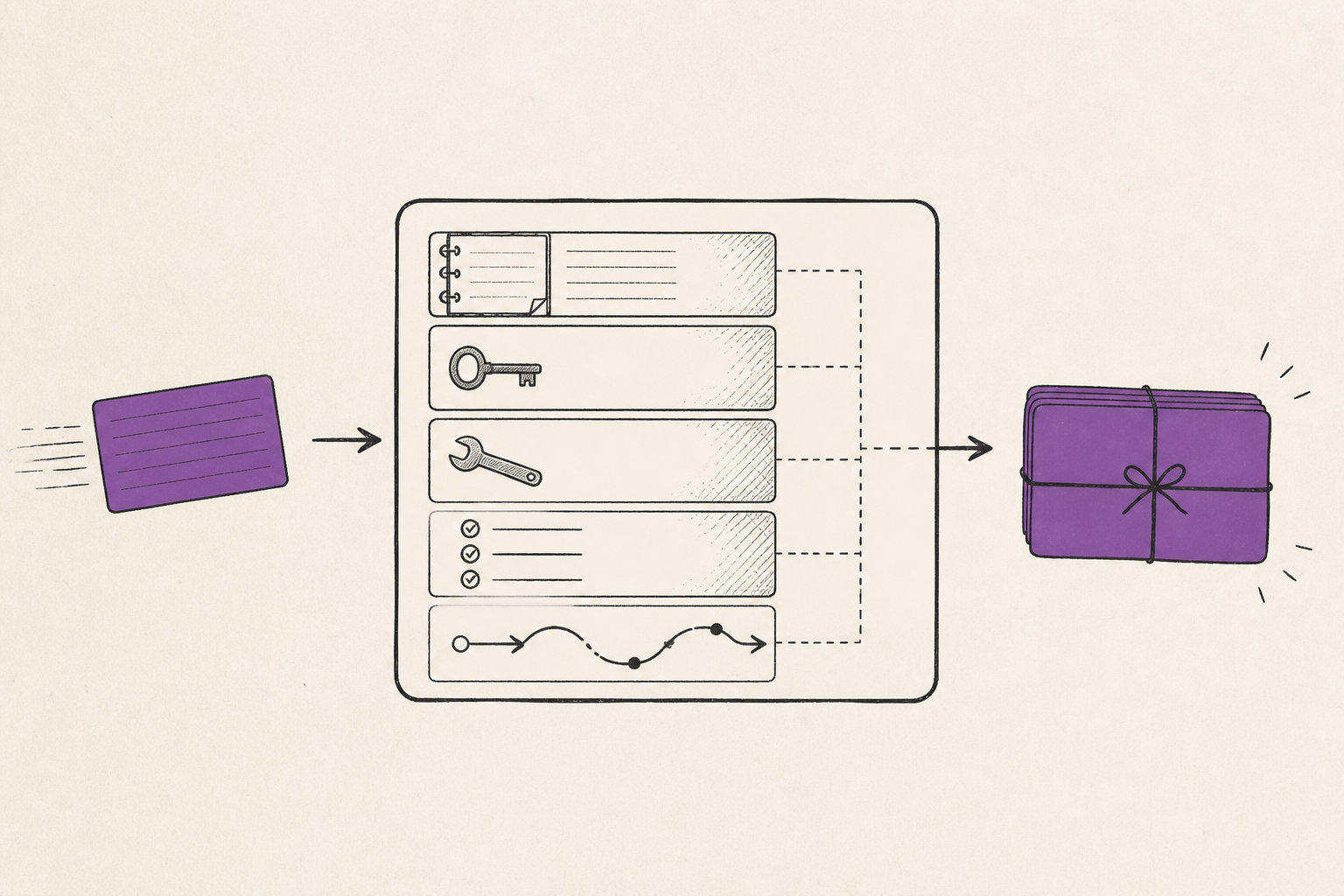
The package around the prompt
A reusable AI workflow stores the parts that should not be reconstructed every time.
Try this prompt
Use this to audit your current AI setup against the package model:
"I want to assess how much of the useful context and structure for my typical AI tasks currently lives in my prompts versus somewhere more permanent. For each of my three most common AI tasks: list (1) what context I'm re-entering each time that could be pre-loaded, (2) which tools or data sources I'm manually pointing to that could be connected, (3) what output standards or workflow steps I'm describing each time that could be defined once. Then suggest one concrete change for each task to move that load out of the prompt and into something persistent."
Related on this site
- AI is moving from chatbots to operating systems – the broader platform shift that makes the package model the right frame
- Agent memory is being built around the model – where context lives when it's not in the prompt
- AI prompt library for VCE – what the current prompt-as-product model looks like in practice, and where it reaches its limits
Sources
- OpenAI, "Codex for every role, tool, and workflow", 2 June 2026
- OpenAI, "New ways to learn and teach with ChatGPT Work and Codex", 4 August 2026
- OpenAI, "Codex is becoming a productivity tool for everyone", 2 June 2026
- OpenAI, "How agents are transforming work", 25 June 2026
- Anthropic, "Trustworthy agents in practice", 9 April 2026