The most interesting part of GPT-5.6 is not that OpenAI has another stronger model.
That will keep happening.
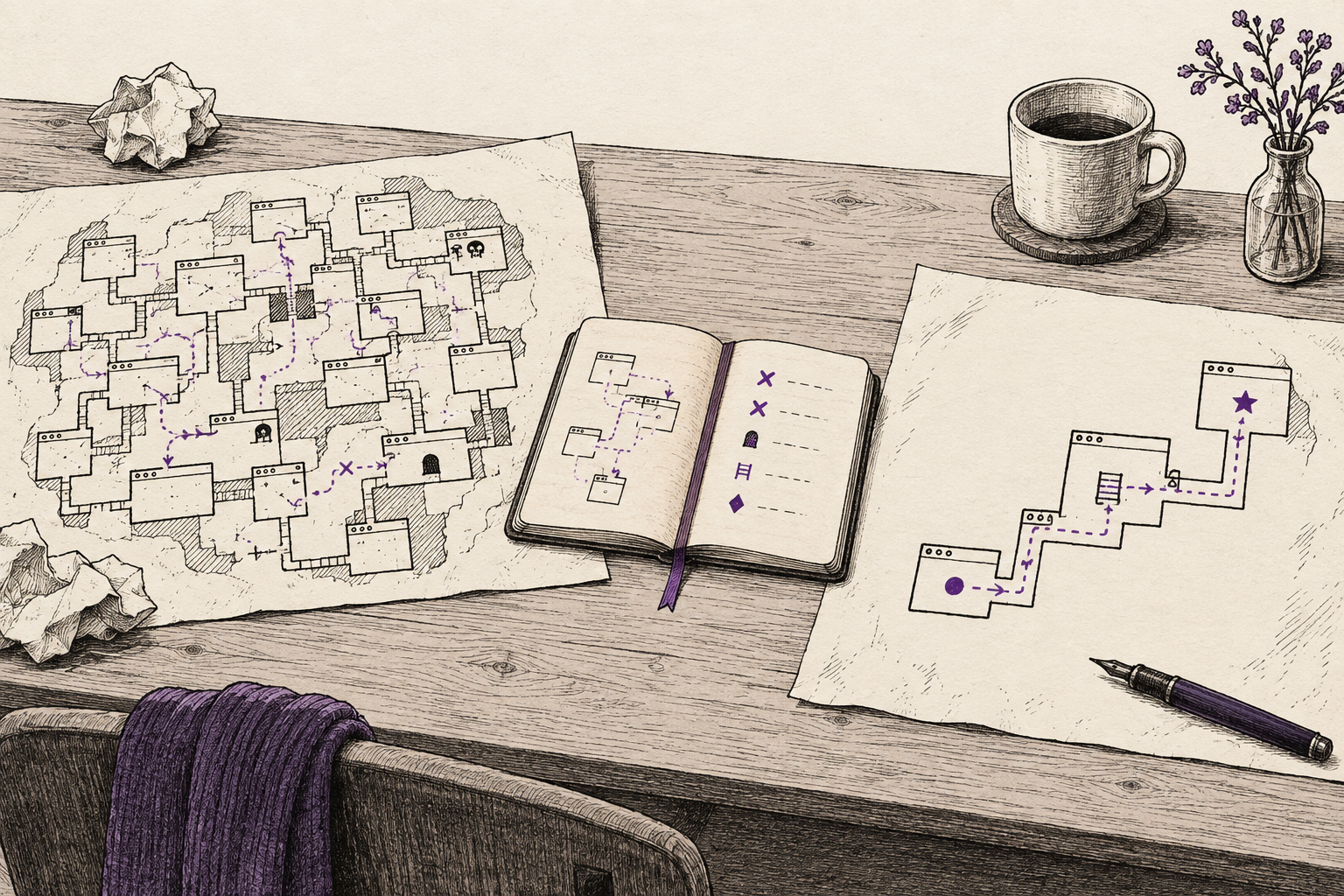
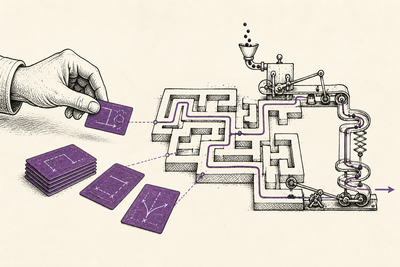
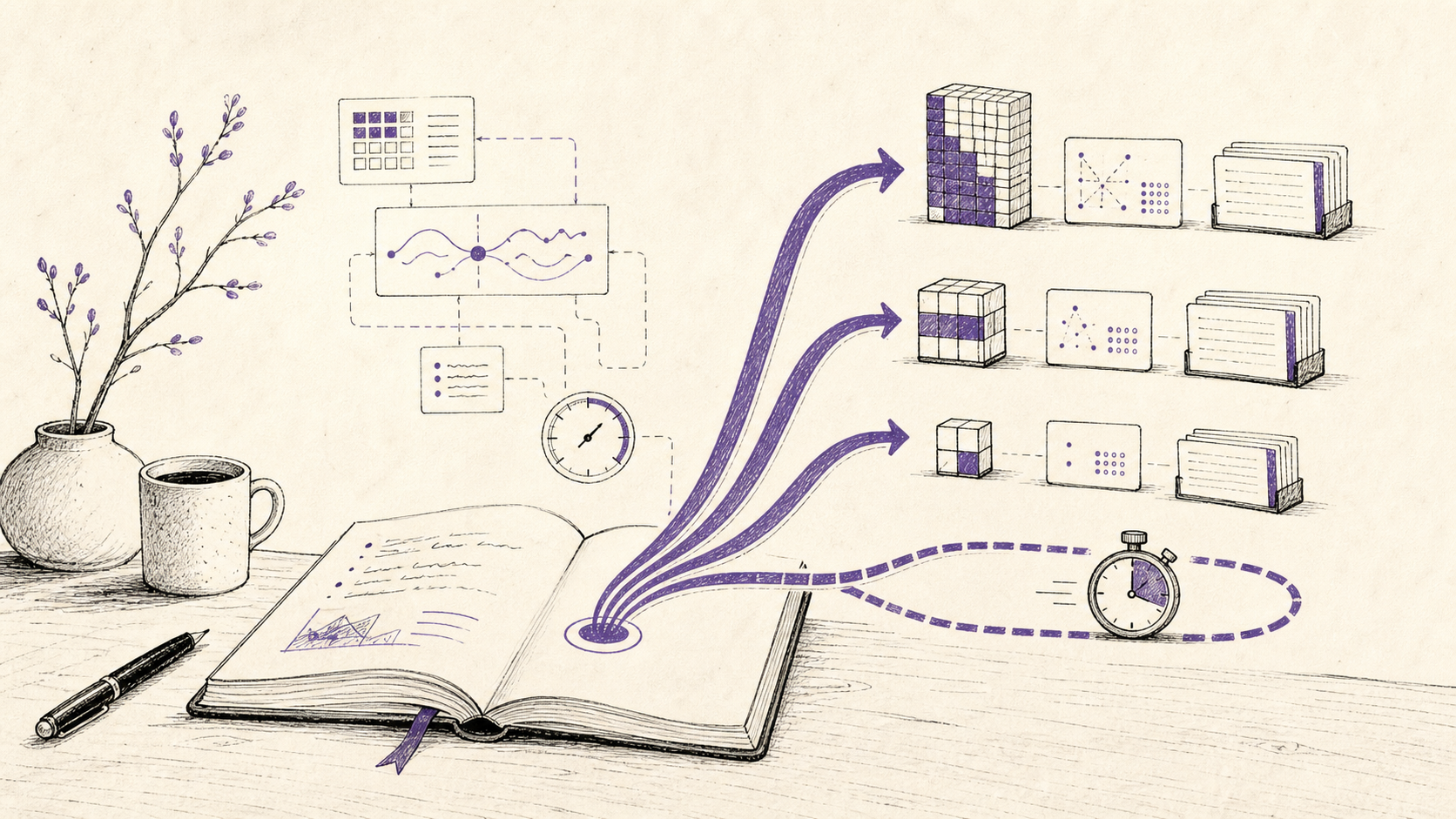
The more interesting part is that the release reads like a routing table.
On 26 June 2026, OpenAI announced a limited preview of the GPT-5.6 family: Sol as the flagship model, Terra as the balanced everyday model, and Luna as the fast, cheaper model. On 9 July, it moved the family into general availability, with access across ChatGPT, Codex, and the API.
The names now have concrete API IDs: gpt-5.6-sol, gpt-5.6-terra, and gpt-5.6-luna, while gpt-5.6 points to Sol. Each model has a 1,050,000-token context window and supports reasoning effort up to max. Terra is meant to sit close to GPT-5.5 performance at lower cost. Luna gives developers a lower-price lane for work that does not need the flagship.
Then there is the Cerebras line.
In the June preview, OpenAI also announced GPT-5.6 Sol on Cerebras in July at up to 750 tokens per second, first for selected customers while capacity expands. The 9 July general-availability announcement covers the model family across OpenAI's products, but does not say that this separate high-speed lane is broadly self-serve.
That is the sentence I keep coming back to.
Not because 750 tokens per second is a clean universal number. It will vary by workload, context, mode, queueing, provider capacity, and whatever product wrapper sits around the call. But it points at a clearer operating model: a model family where capability, latency, cost, cache behaviour, risk, and human supervision can be treated as different lanes in the same system.
This is probably the right way to read the release.
Not as one impressive model. As a map of where AI products are heading.
The family is already a routing table
The names are doing more work than they first appear to.
OpenAI says the number identifies the generation, while Sol, Terra, and Luna identify durable tiers that can move on their own cadence. In other words, the family is more than a leaderboard. It is a product grammar.
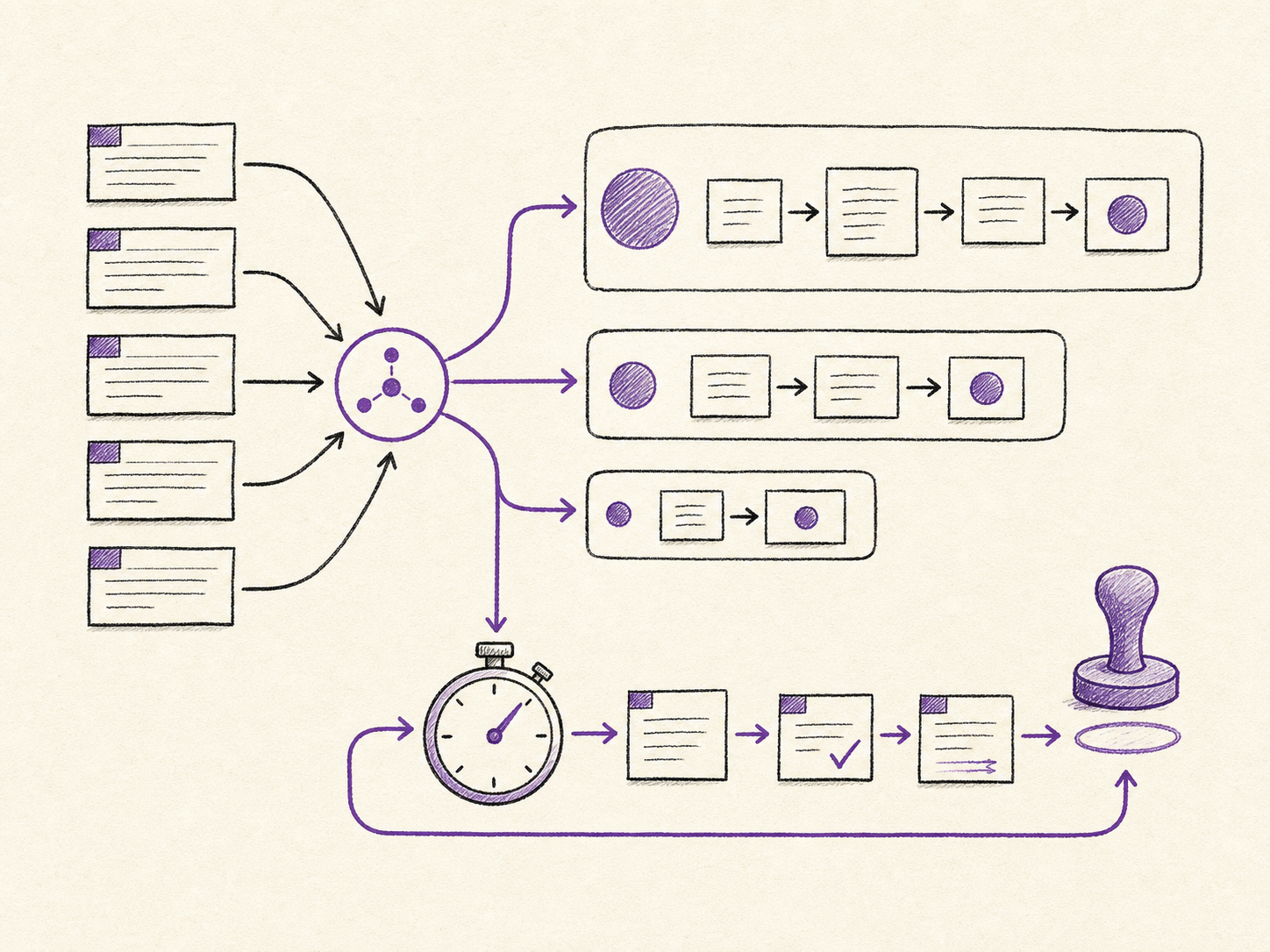
Sol is the high-capability lane. It gets the deepest reasoning effort and the most complex work.
Terra is the balanced lane. It is the model you would expect to use when cost still counts, but the work is too important for the cheapest option.
Luna is the motion lane. It is there for the work where speed and price make more difference than marginal reasoning depth.
The pricing makes the shape clearer. OpenAI lists GPT-5.6 Sol at $5 input and $30 output per million tokens, Terra at $2.50 input and $15 output, and Luna at $1 input and $6 output. It also introduces more predictable prompt caching, with explicit cache breakpoints, a 30-minute minimum cache life, cache writes at 1.25x the uncached input rate, and cache reads at a 90% discount.
That sounds like API detail. It is more useful than that.
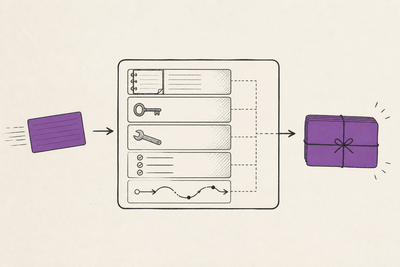
Once model choice becomes a routing decision, caching becomes part of the architecture. If the same long workspace context, policy packet, codebase summary, or lesson corpus is going to be reused across many calls, the product question changes. You are no longer only choosing a model. You are choosing where the stable context should live, how often it should be paid for, and which model should handle each pass.
That is closer to how real AI work feels now.
Some tasks need the strongest model. Some need a cheap critic. Some need a fast drafter. Some need a model that can sit in a loop with tools for a while. Some need a human before any action leaves the screen.
The useful product does not ask one model to be all of those things. It routes.
GPT-5.6 routing lanes
The family is easiest to understand as a set of lanes for different work, not one flat replacement for the last model.
Sol is the ceiling lane
Sol is still the obvious headline.
OpenAI describes it as the strongest GPT-5.6 model. The family supports a new max reasoning effort. That is useful in a narrow, practical way: sometimes you want the model to take longer because the work is genuinely hard.
The release also introduces an ultra mode that coordinates four agents in parallel by default for complex work. In the API, developers can build a similar pattern through the multi-agent beta in the Responses API. That is the part that feels more revealing than a single benchmark number. A frontier model is no longer only a single answer engine. It is increasingly a coordinator: run more passes, split parts of the work, gather tool results, compare attempts, and return something closer to a solved task.
This connects directly to coding.
OpenAI reports GPT-5.6 Sol at 88.8% on Terminal-Bench 2.1, rising to 91.9% with ultra; Terra reaches 87.4% and Luna 84.7%. The benchmark is built around command-line workflows, planning, iteration, and tool coordination. That is a different signal from "writes a good function in one shot". It is closer to the work people are actually trying to hand to agents.
The same release frames Sol around biology workflows and cybersecurity work. That part should be read carefully. OpenAI says the model is better at finding and fixing vulnerabilities than reliably carrying out autonomous end-to-end attacks, and that it did not cross the Cyber Critical threshold in the tested conditions. It also says benchmarks cannot capture every way a model may be combined with other tools.
That caveat is important.
The higher the model ceiling gets, the less believable it is to treat safety as a static policy page beside the product. It becomes runtime architecture: model behaviour, real-time cyber and biology misuse classifiers, account-level review, differentiated access, monitoring, enforcement, and continuous testing.
OpenAI's updated GPT-5.6 system card says the family is treated as High capability for cybersecurity and biological/chemical risk, with tailored safeguards and continuous deployment testing. It also says OpenAI used more than 700,000 A100-equivalent GPU hours on automated red-teaming for universal jailbreaks.
That does not make the release simple.
It makes the routing argument stronger. Capability routing and risk routing have to live together.
Cerebras makes speed part of the frontier
The Cerebras detail changes the feel of the whole announcement.
OpenAI and Cerebras already announced a partnership on 14 January 2026 to add 750MW of ultra low-latency AI compute to OpenAI's platform, coming online in tranches through 2028. Cerebras described the same deal as a multi-year deployment of wafer-scale systems for OpenAI customers.
At the time, that sounded like infrastructure strategy.
With GPT-5.6 Sol, it starts to sound like a product lane.
The dates matter here. The GPT-5.6 family moved from preview on 26 June to general availability on 9 July. The Cerebras route was announced separately for July and initially limited to selected customers; the general-availability post does not say that the 750-token-per-second route has become broad self-serve access. So the honest version is not "everyone can use 750-token-per-second Sol today". The honest version is more interesting: OpenAI is publicly tying a frontier model to a high-speed inference surface.
That is a shift.
I wrote recently that the future feels like 1,000 tokens a second. The argument there was not that fast inference magically improves model judgement. It was that more loops can fit inside one human attention window: draft, check, repair, compare, escalate, return.
The GPT-5.6/Cerebras launch sits directly inside that frame.
Cerebras is already making the speed case in public. Its Cerebras Code page currently positions GLM 4.7 at more than 1,000 tokens per second for coding, although the public plans shown there are sold out. Its Kimi K2.6 enterprise-trial post says Artificial Analysis measured a private Cerebras endpoint at 981 output tokens per second on 6 May 2026, and that a 10,000 input token plus 500 output token request completed in 5.6 seconds on Cerebras versus 163.7 seconds on the official Kimi endpoint.
That Kimi number is not a general public access claim. It is an enterprise/private-endpoint result. But it makes the product direction easier to feel.
At these speeds, the interface becomes exposed.
Cerebras' own design guide says many slow-inference workarounds can become the bottleneck when the model is fast: elaborate progress trees, per-token streaming renderers, queue-heavy request paths, background agent jobs, and voice pipelines designed around slower response times.
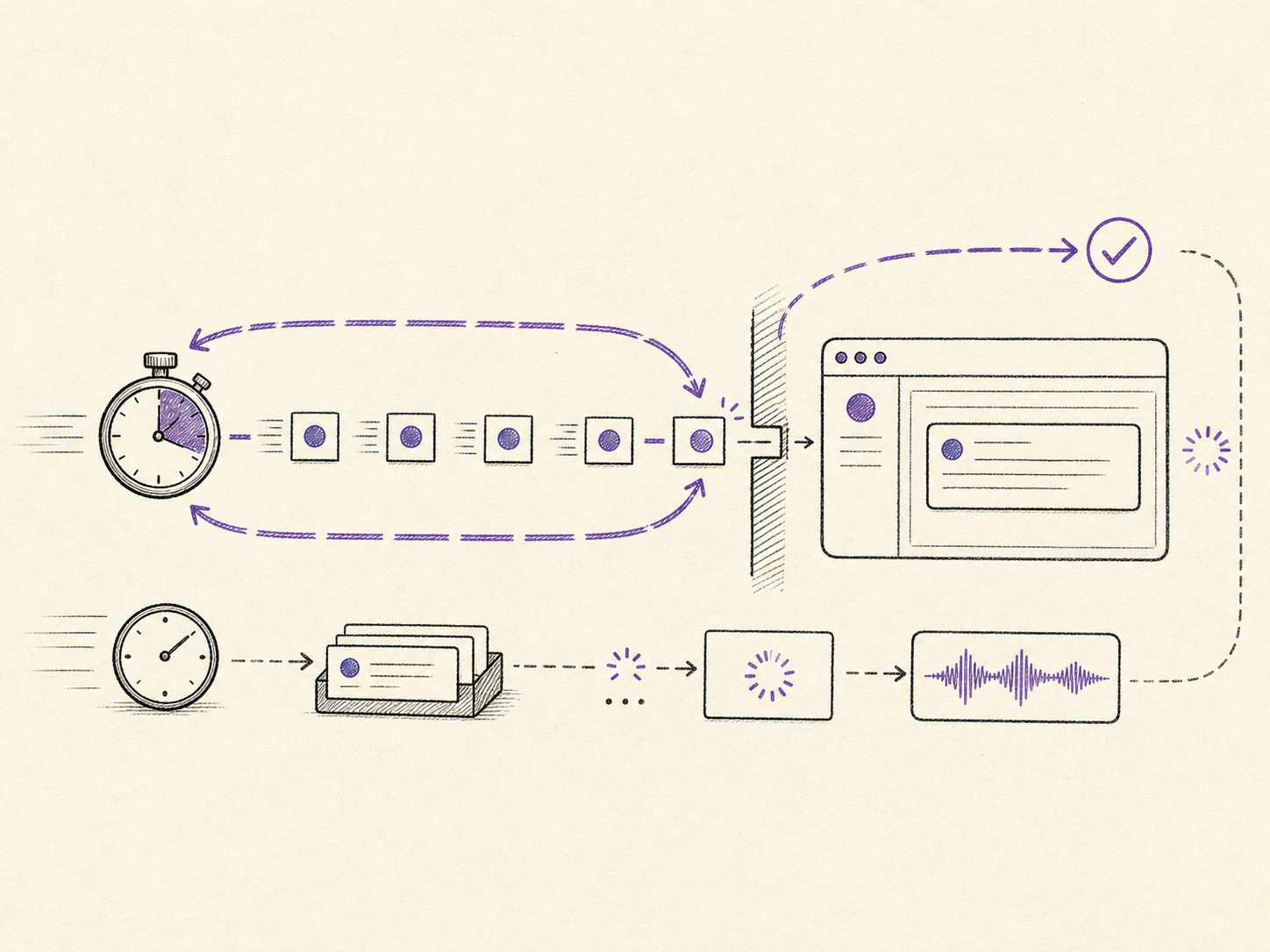
That is the real product question.
If the model can finish before the UI catches up, the old streaming theatre stops being a kindness. If a multi-step agent loop can fit inside a normal request path, the old background-job interface may be the wrong shape. If voice latency is dominated by speech-to-text and text-to-speech rather than the model call, the product bottleneck has moved.
Speed does not replace reasoning.
It changes where reasoning can sit.
The harder question is supervision
The routing layer is more than an optimisation problem.
It is a supervision problem.
If a system has Sol, Terra, Luna, cached context, tool access, real-time classifiers, and a fast Cerebras lane, the interesting design work is deciding when the human should stay close.
Some work should run fast and cheap:
- first drafts
- source clustering
- comparison tables
- low-risk formatting
- self-checks against a rubric
- quick code review comments before a stronger pass
Some work should move to the ceiling lane:
- final judgement
- ambiguous instructions
- security-sensitive patches
- high-stakes decisions
- multi-step tool actions
- anything where a bad answer is expensive to unwind
Some work should stop and ask.
That last category is easy to under-design. A faster model can produce more action before the human notices the wrong assumption. A stronger model can sound more final while still being wrong in a way that only local context would reveal. An agent loop can look productive while quietly drifting away from the user's real constraint.
So the product should ask more than "which model is cheapest?" or "which model is strongest?"
It should ask:
- What failure would be hard to reverse?
- Is this execution work or judgement work?
- Does the model need stable cached context?
- Should a cheaper model draft and a stronger model review?
- Should the fast lane produce options, or take action?
- What signal would trigger escalation back to the human?
That is why GPT-5.6 feels more interesting than a normal release cycle.
It is making the architecture visible.
The source trail keeps the dates and surfaces separate: preview on 26 June, general availability on 9 July, and the selected-customer Cerebras route as its own announced lane.
GPT-5.6 release
General availability, model tiers, pricing, max reasoning, ultra mode, and API access.
System card
Cyber and biology risk posture, layered safeguards, monitoring, and deployment controls.
Cerebras docs
High-speed inference pushes bottlenecks into UI, queues, agent loops, and voice layers.
What I would build around it
The practical pattern I would test is small.
Take one workflow that currently goes through a single model call and split it into lanes.
For example, a research-to-post workflow might look like this:
- Luna clusters sources and extracts claims.
- Terra drafts the first structure and identifies missing context.
- Sol reviews the argument, checks the risky assumptions, and decides what needs stronger evidence.
- Where available, a fast Cerebras Sol lane runs repeated rewrite/check loops while the post is still in the same attention window.
- The human approves source framing, judgement, and final wording before anything publishes.
That sounds more complicated than "ask the best model".
In practice, it may be simpler because each lane has a job.
The cheap model does cheap motion. The balanced model handles ordinary synthesis. The ceiling model does hard judgement. The fast lane compresses iteration time. The human keeps authority over intent, taste, risk, and publication.
This is also where Inference Speed Lab becomes useful. Token speed is abstract until you feel the gap across repeated loops. One slow answer is annoying. Eight slow attempts, each with a tool call and a repair pass, changes whether you stay with the work at all.
The best AI products probably will not expose all of this as a messy model picker.
They will turn it into operating behaviour.
The user asks for the work. The system decides what should be cheap, what should be fast, what should be reviewed, what should be cached, what should be blocked, and what needs a human. The user sees a clear result and a clear audit trail.
That is the more durable reading of GPT-5.6.
The model got stronger.
But the stack got more legible.
Try this prompt
Take one AI workflow I use regularly and redesign it as a routing system. Split the work into cheap motion, balanced synthesis, high-judgement review, cached context, and human approval. For each step, name the model lane, the expected failure mode, the escalation trigger, and the smallest version I could test this week.
Related on this site
- The Future Feels Like 1,000 Tokens a Second is the companion essay on why fast inference changes the shape of the human loop.
- Inference Speed Lab turns the speed gap into a small timing model rather than a benchmark argument.
- AI Is Moving From Chatbots to Operating Systems is the broader frame for why model releases should be read through tools, agents, memory, and workflow architecture.
- The Floor and Ceiling of AI is the related lens for separating frontier capability from the increasingly capable open and cheaper model floor.
Sources
- OpenAI: GPT-5.6 general availability
- OpenAI: Previewing GPT-5.6 Sol
- OpenAI API: GPT-5.6 Sol
- OpenAI API: GPT-5.6 Terra
- OpenAI API: GPT-5.6 Luna
- OpenAI Deployment Safety Hub: GPT-5.6 System Card
- OpenAI: OpenAI partners with Cerebras
- Cerebras: OpenAI Partners with Cerebras to Bring High-Speed Inference to the Mainstream
- Cerebras Code
- Cerebras: Kimi K2.6 enterprise trials
- Cerebras Inference docs: Designing for Cerebras